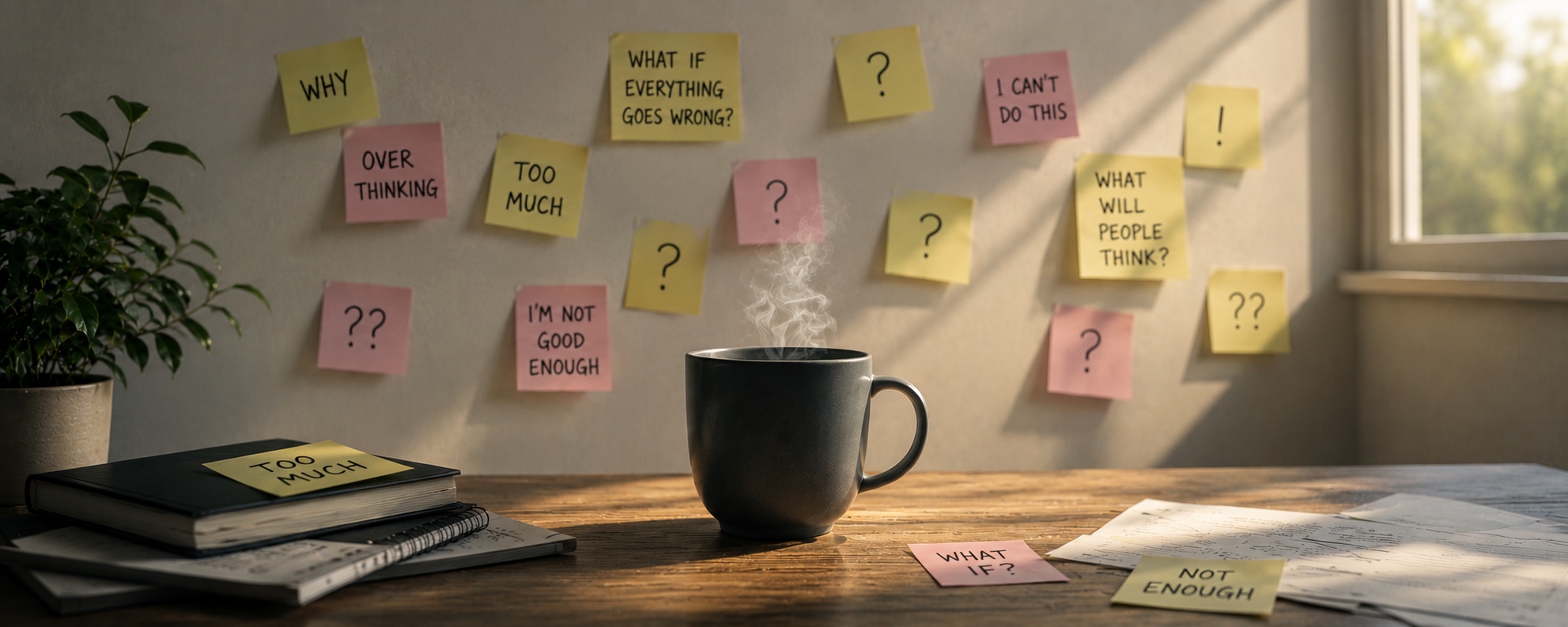
When people think about anxiety, they often assume it starts with thoughts — overthinking, worrying, stress, or racing thoughts. And while the mind absolutely plays a role, anxiety is also something you physically feel in the body, sometimes even before you notice it mentally. A racing heart. Tightness in the chest. Restlessness. Shallow breathing. Muscle tension. Feeling constantly “on edge.”
These are physical responses, not just emotional ones. And for many people, that’s the part that feels most confusing — because even when nothing dangerous is happening, the body still reacts as though something is wrong.
Anxiety Is Actually a Built-In Survival Response
At its core, anxiety is your body trying to protect you.
Your nervous system is designed to detect threats and prepare you to respond quickly when needed. When the brain senses danger — whether real or perceived — it sends signals throughout the body. Heart rate increases, breathing changes, muscles tense, and your awareness sharpens.
In short bursts, this response is incredibly useful. It’s what helps humans react quickly under pressure. But when the stress response stays switched on for too long, it can stop feeling helpful and start feeling like constant anxiety that never fully goes away.
Why Your Body Can Get “Stuck” in Alert Mode
For many people, the real issue isn’t the stress response itself — it’s that the body struggles to switch it back off.
Ongoing stress is one of the biggest reasons for this. Even low-level everyday pressures can gradually keep the nervous system in a more activated state than it should be. Recovery becomes just as important here. Sleep, rest, and downtime are what allow the body to reset and move back into a calmer state. Without proper recovery, the nervous system can stay on high alert, making it harder to fully relax or feel safe in your own body.
Over time, this can create that familiar “wired but tired” feeling where you feel exhausted physically, but mentally unable to switch off.
The Physical Side of Anxiety Most People Overlook
There’s also another layer that many people don’t immediately think about: what’s happening inside the body itself.
Your nervous system depends on a stable balance of nutrients and minerals to regulate stress, energy, hormones, and overall brain function. Magnesium helps support relaxation and nervous system recovery. Sodium and potassium help regulate your stress response and fluid balance. Zinc and copper are involved in brain signalling and neurological function. These nutrients don’t work alone — they work together in balance.
And when that balance becomes disrupted, the body can become more sensitive and reactive, making anxiety easier to trigger and harder to calm down.
Why Anxiety Rarely Comes Alone
Anxiety also rarely appears on its own. Many people notice poor sleep, fatigue, digestive discomfort, low energy, muscle tension, headaches, or brain fog happening alongside it.
At first, these symptoms can feel random and unrelated. But when you step back and look at the bigger picture, patterns often begin to emerge. Feeling physically exhausted while also mentally overstimulated may seem contradictory, yet it’s one of the most common experiences people describe.
Rather than pointing to separate issues, these symptoms often reflect one system influencing multiple areas of the body at the same time.
Why It Can Feel So Hard to “Fix”
When anxiety becomes ongoing, most people genuinely try to feel better. They adjust their diet, try supplements, improve their routines, or focus on stress management and relaxation techniques.
Sometimes those things help temporarily, but the results are often inconsistent or don’t fully last. That’s usually because the underlying pattern hasn’t been clearly identified yet. Without understanding what your body is actually responding to — or what it may need more support with — it’s easy to end up stuck in constant trial and error. It’s rarely a lack of effort. More often, it’s a lack of clarity.
Looking at Anxiety in a Different Way
Instead of seeing anxiety as purely emotional or “just mental,” it can be more useful to start looking at it as a whole-body response: “What is your body reacting to?“, “What patterns have been building over time?, “What other symptoms tend to show up alongside the anxiety?.
Once you begin looking at anxiety in the context of your overall health rather than as an isolated problem, things often start making much more sense — and the experience itself can begin to feel far less overwhelming.
Where to Start
If your body constantly feels tense, overstimulated, or unable to fully relax, it’s worth listening to what it may be trying to tell you. Anxiety isn’t random. More often, it’s feedback from a nervous system that may be under strain or struggling to maintain balance.
The first step is understanding how your symptoms connect and what patterns may be influencing how your body is responding overall. Tools like the SymptomIQ Health Check can help bring those pieces together and give you a clearer starting point for understanding what your body may be trying to communicate.